The first poster
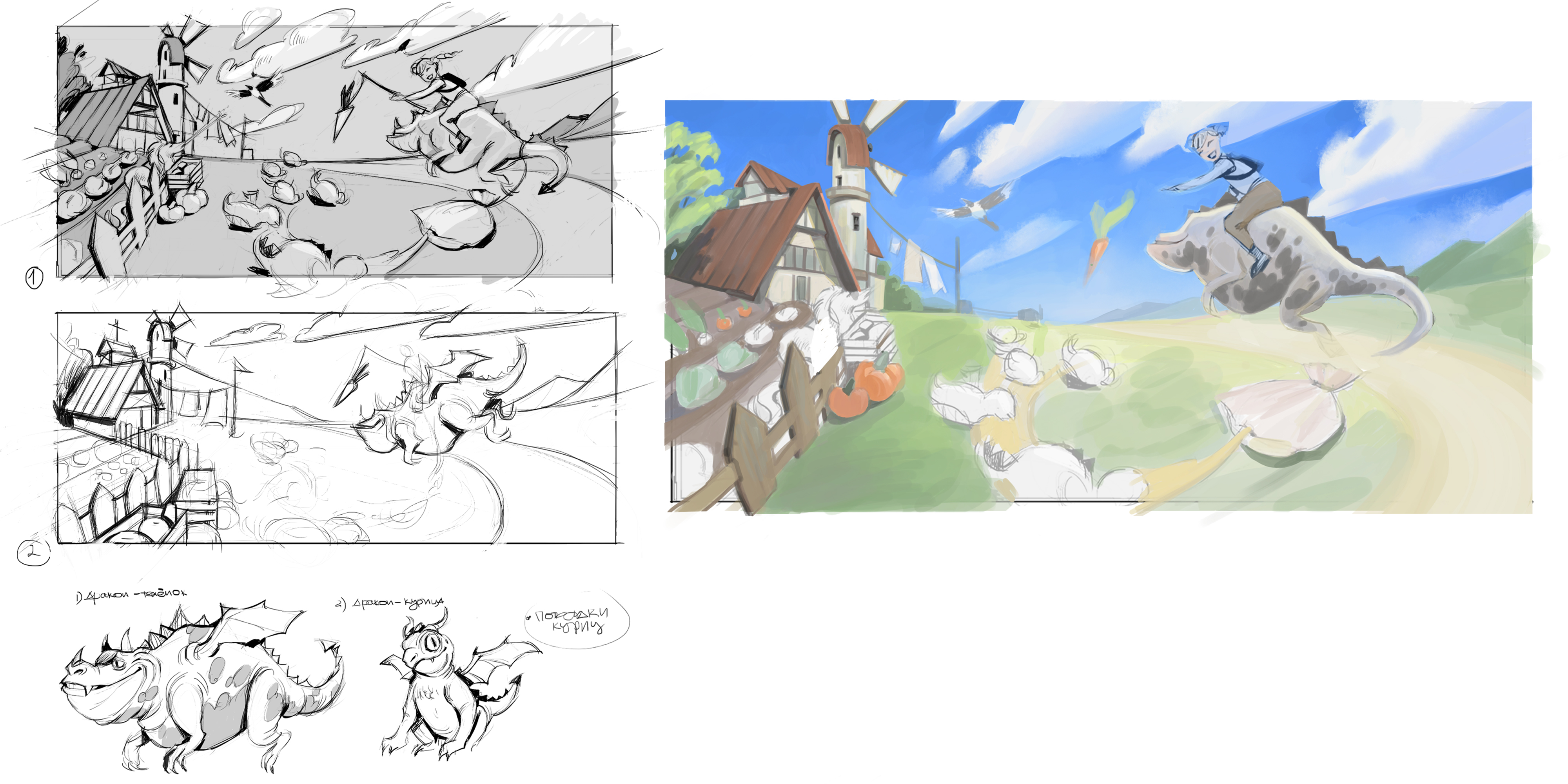
We started where a lot of worlds start: with one picture that had to say everything. We wanted a single key-art frame that captured the feeling of Dragon Shelter in a glance — a little farmstead, a windmill against an open sky, and a dragon mid-stride with a rider on its back, kicking up dust as it tears past the vegetable beds.
It began as scrappy greyscale thumbnails. We blocked out two or three compositions in rough value sketches, just enough to test where the eye should land and how much air to leave around the farmhouse. Once a layout felt right, we pushed it into line-art, then carried it into full color. Seeing that first painted version — green hills, a soft blue sky, the speckled grey dragon in motion — was the moment the project stopped being a document and started being a place.
The moment that first poster went into color, the project stopped being a document and became a place.
Finding the dragons
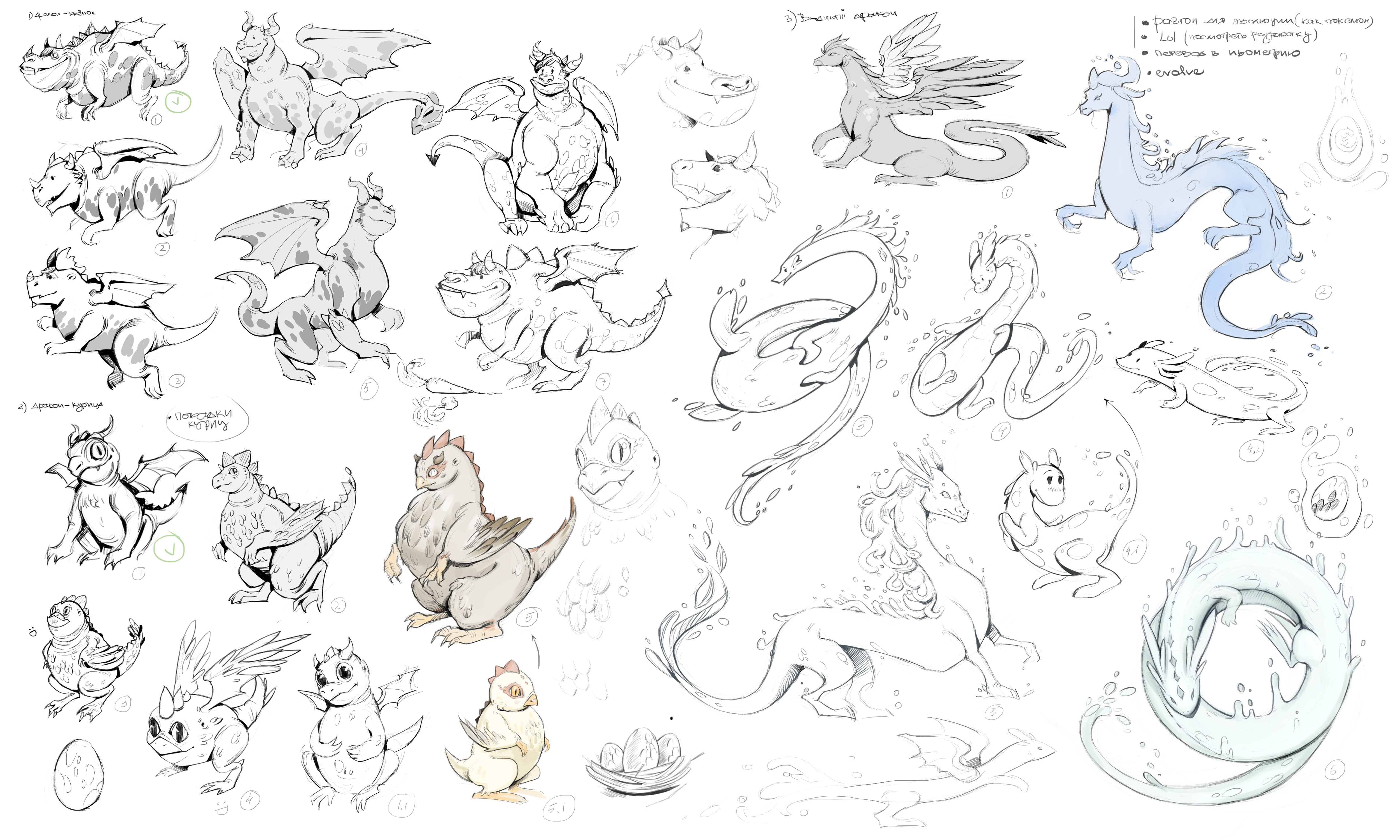
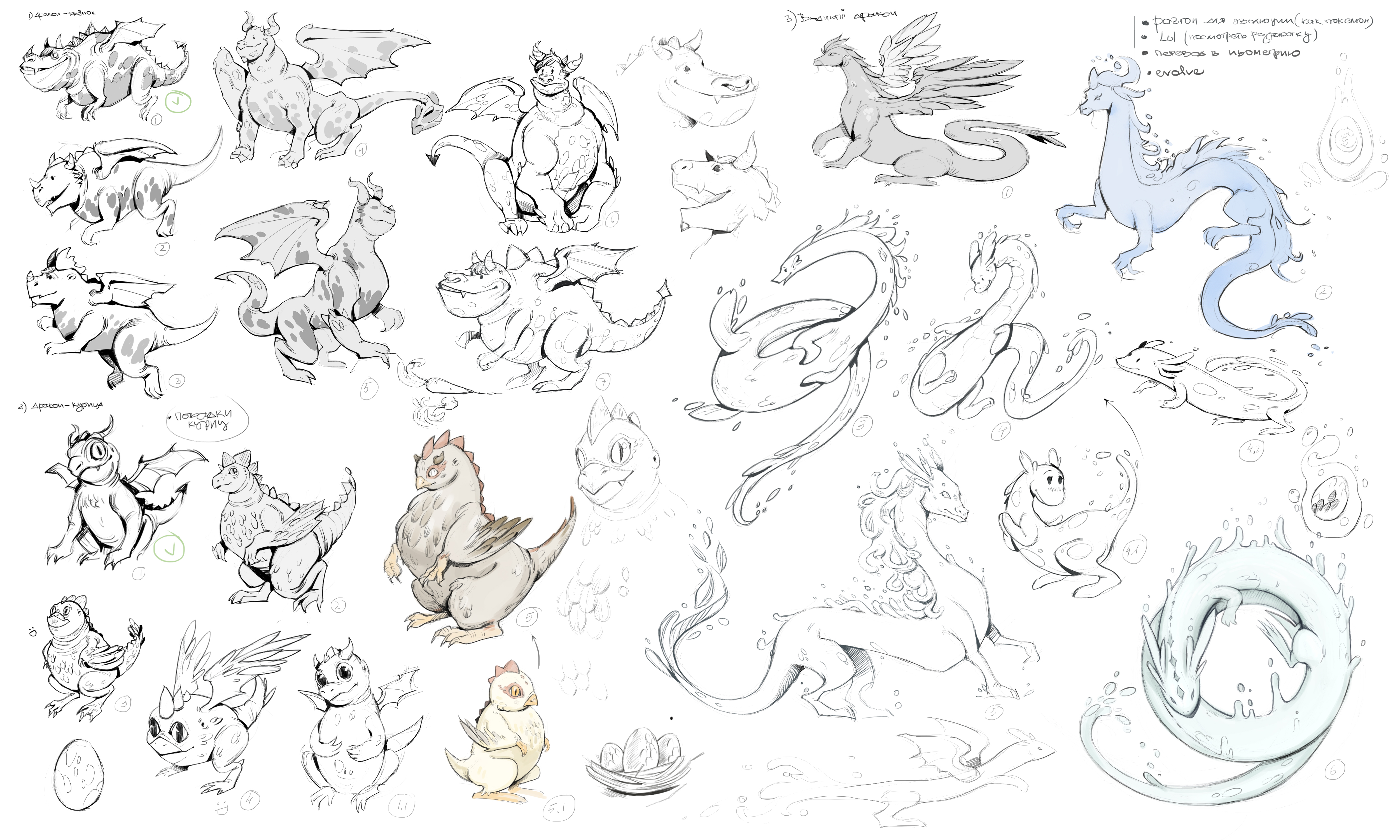
A game called Dragon Shelter needs dragons you actually want to look after, so we drew a lot of them. Whole sheets of them: stocky little brutes, winged lizards, tiny wide-eyed dragonlings, and long serpentine water dragons that coiled across the page like ribbons of river.
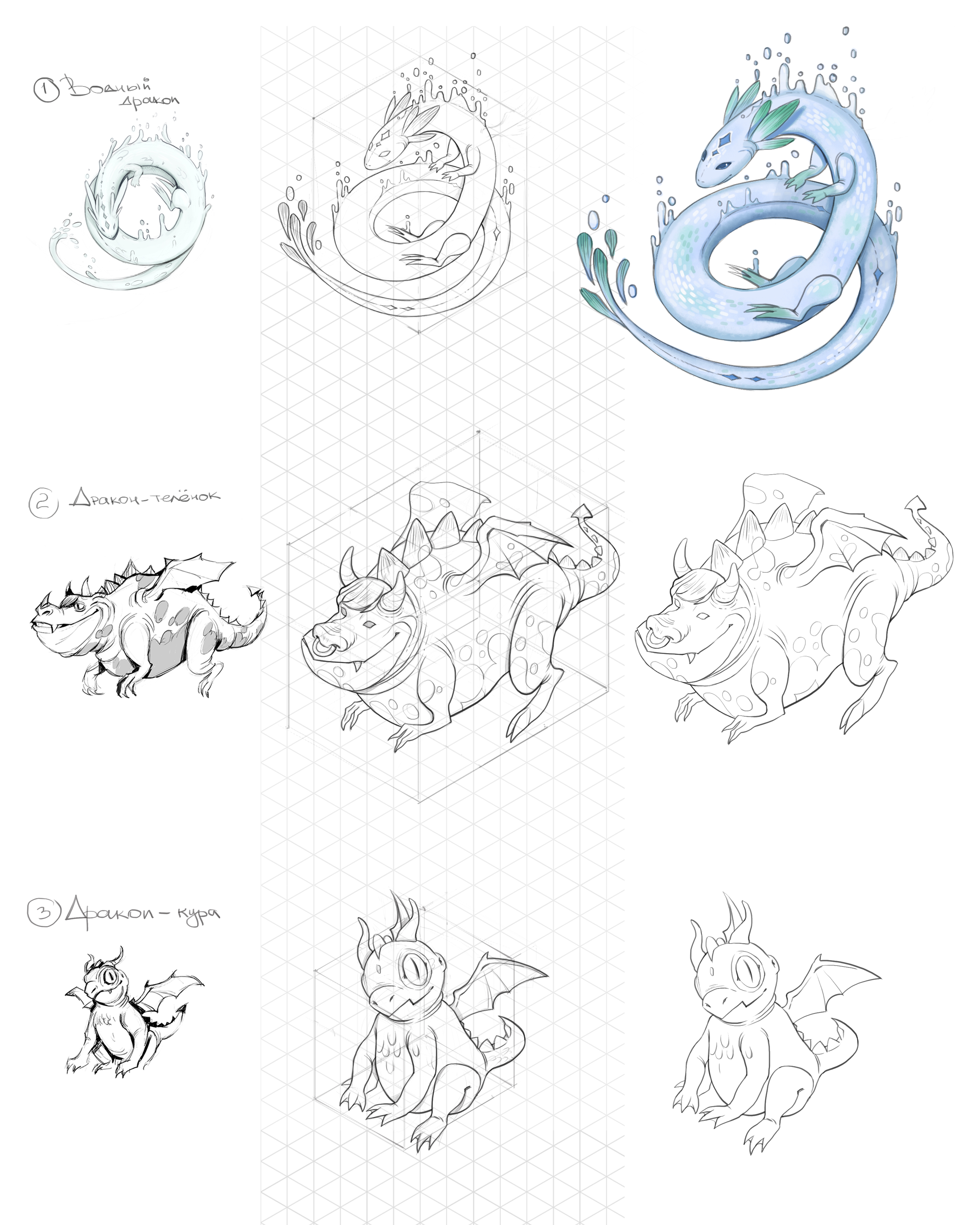
Out of that crowd we kept circling back to a few that had real character. A water dragon, all flowing curves and pale blue scales with little fins like reeds. A chunky, spotted "calf" dragon — heavy, grumpy, lovable. And a small wide-eyed one we nicknamed for how round and chick-like it looked. These became our test cases: distinct silhouettes, distinct moods, easy to tell apart even at thumbnail size.
Into isometric
The hardest decision was the camera. We knew we wanted a cozy, top-down-ish view where you could read the whole farm at once and still feel close to the animals, so we committed to an isometric look — and that changed how we drew everything.
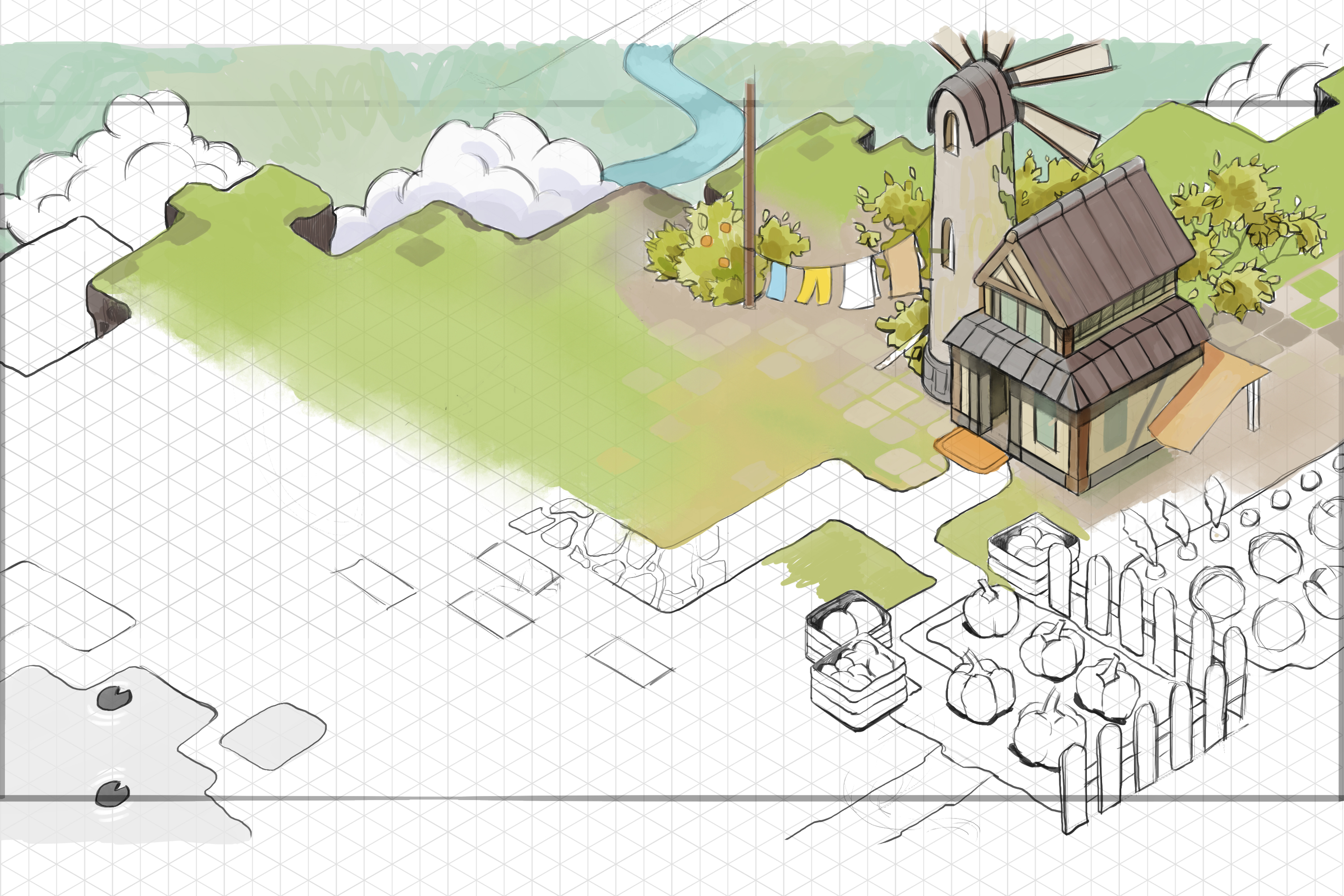
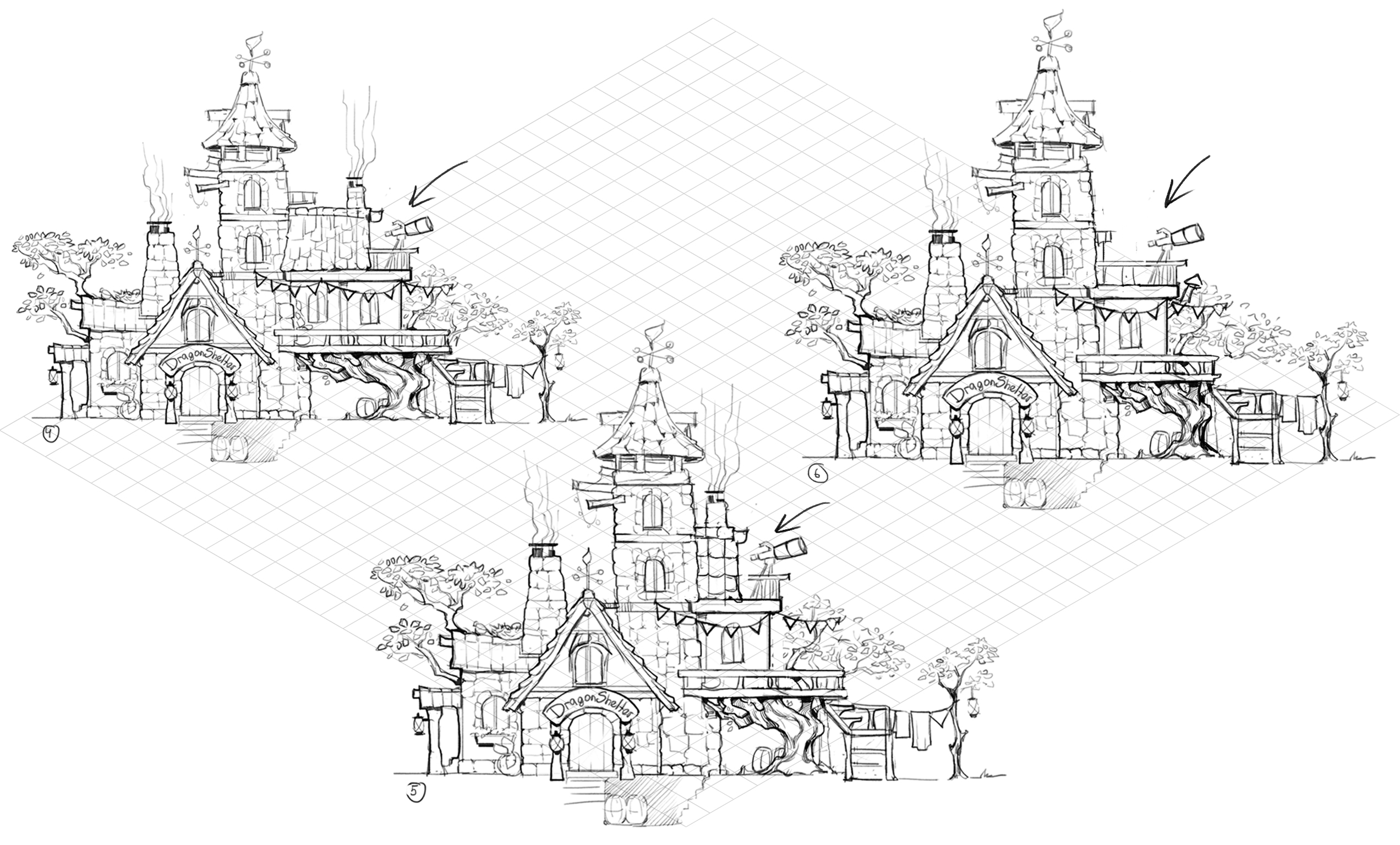
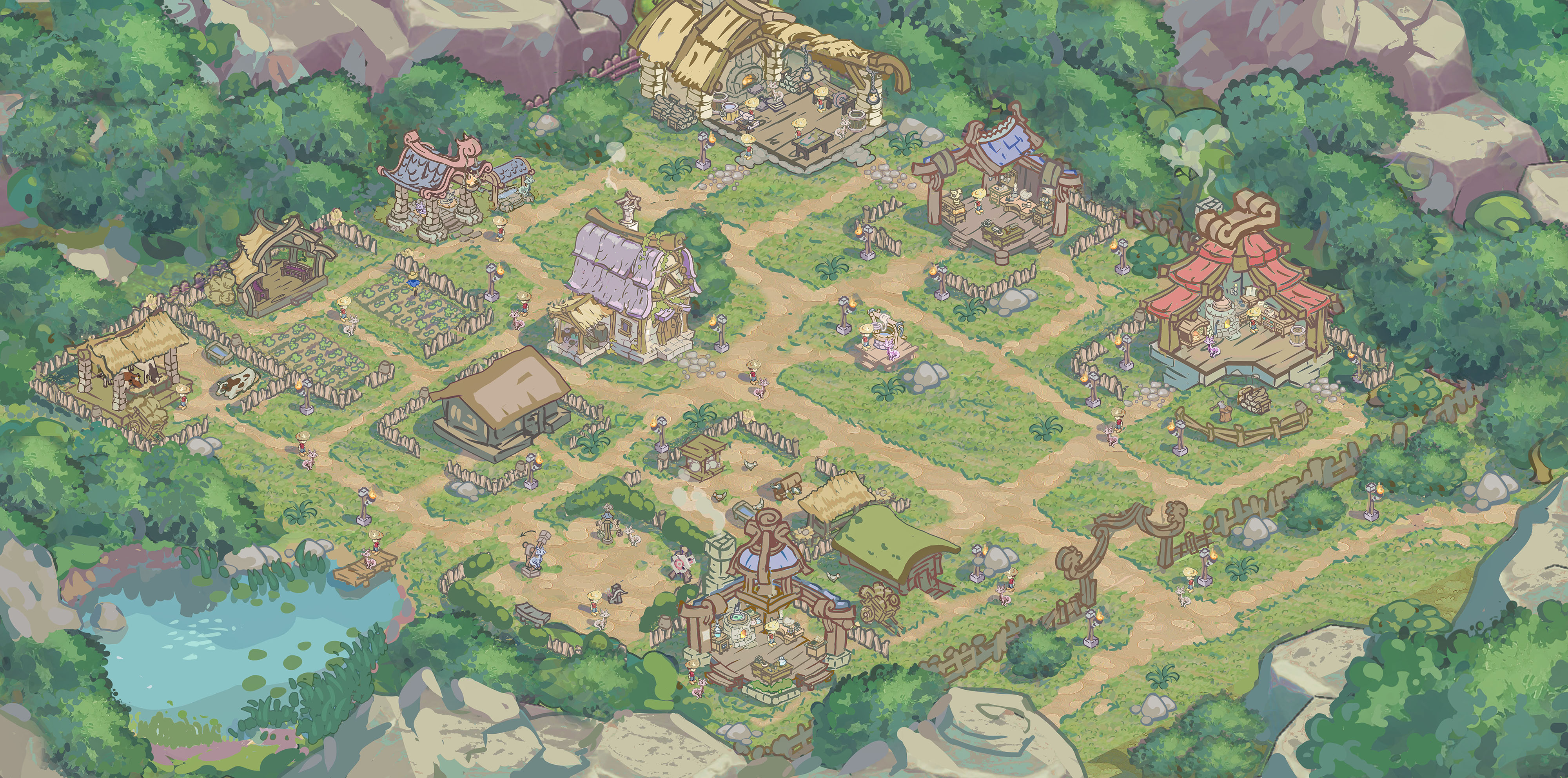
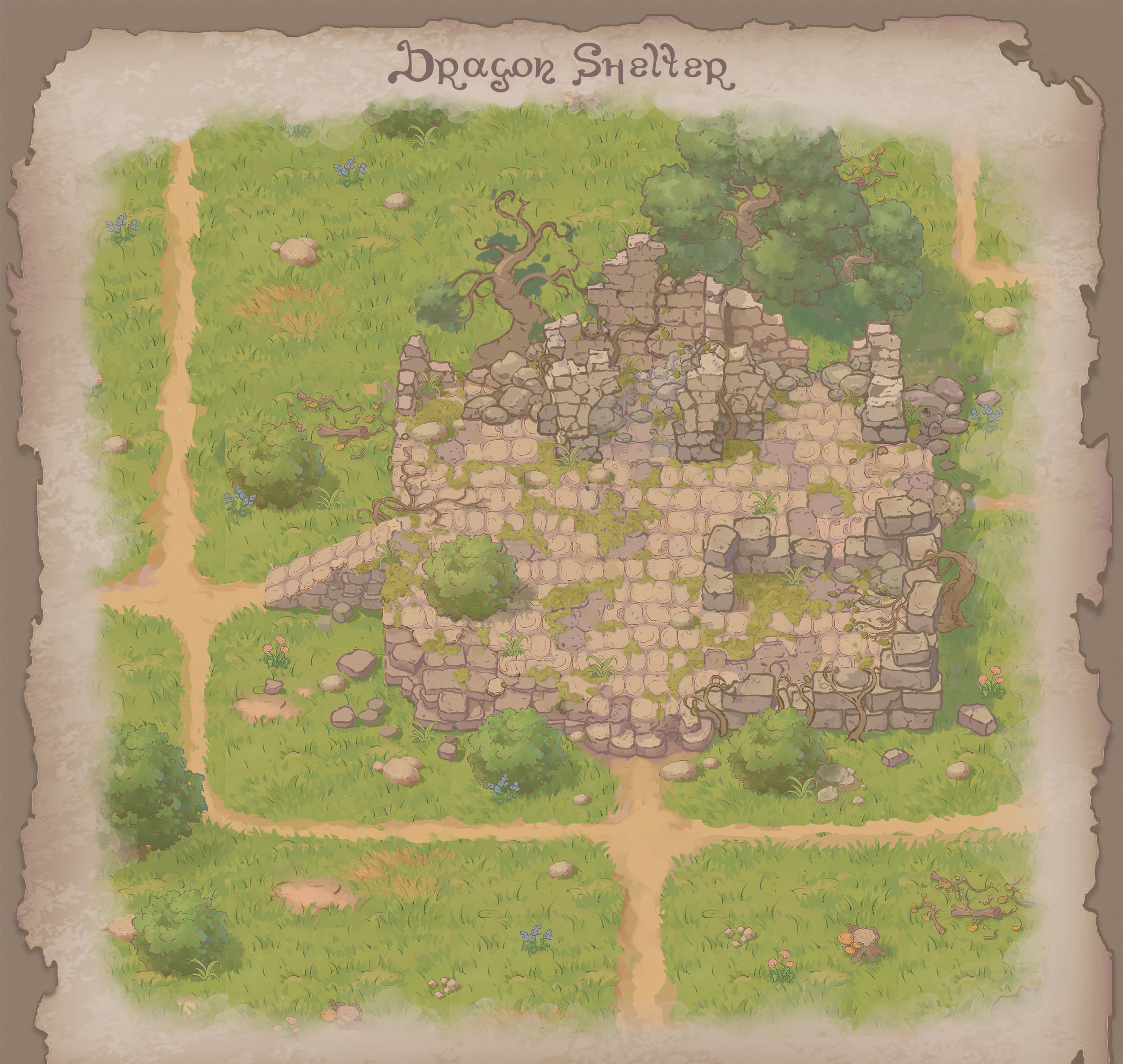
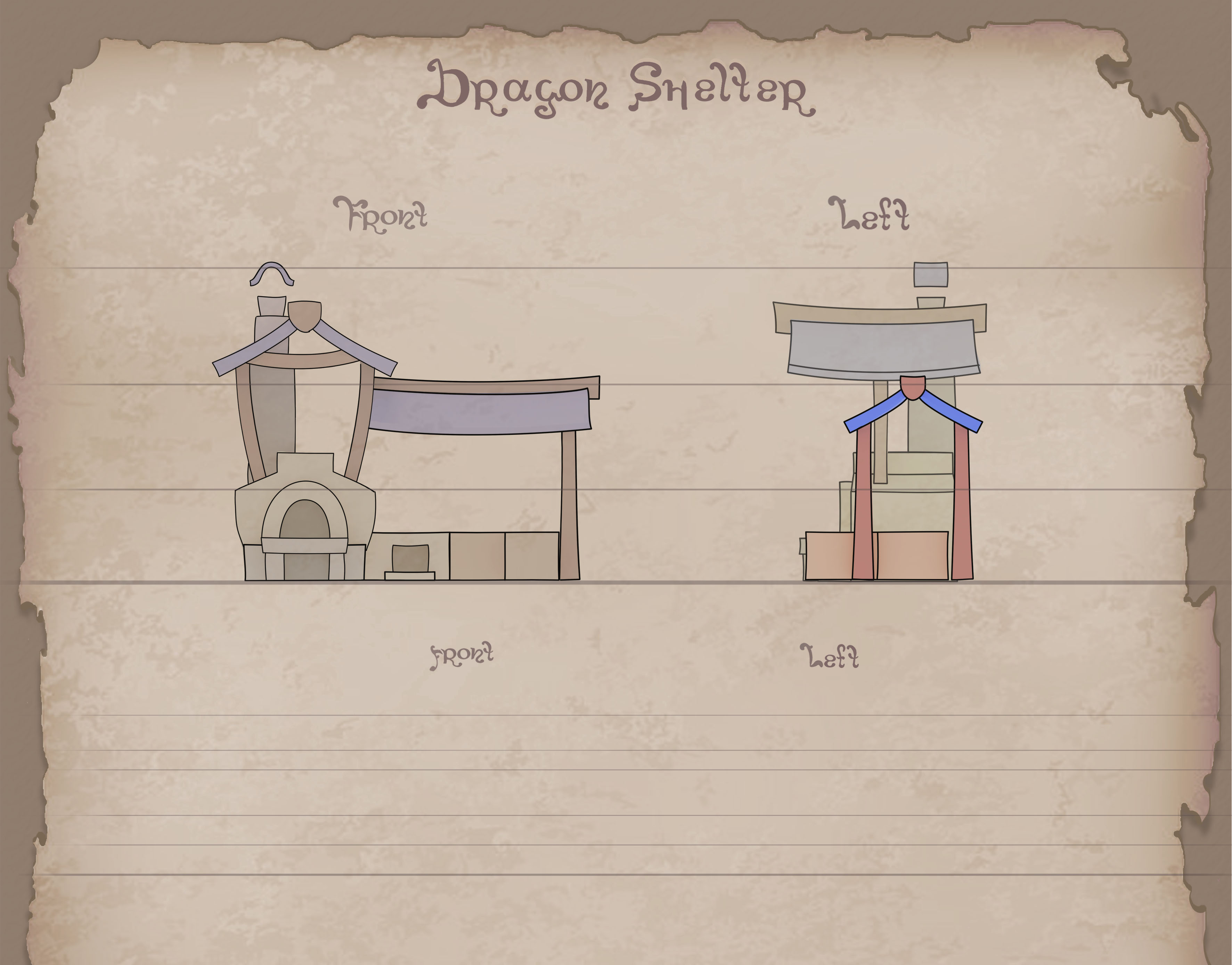
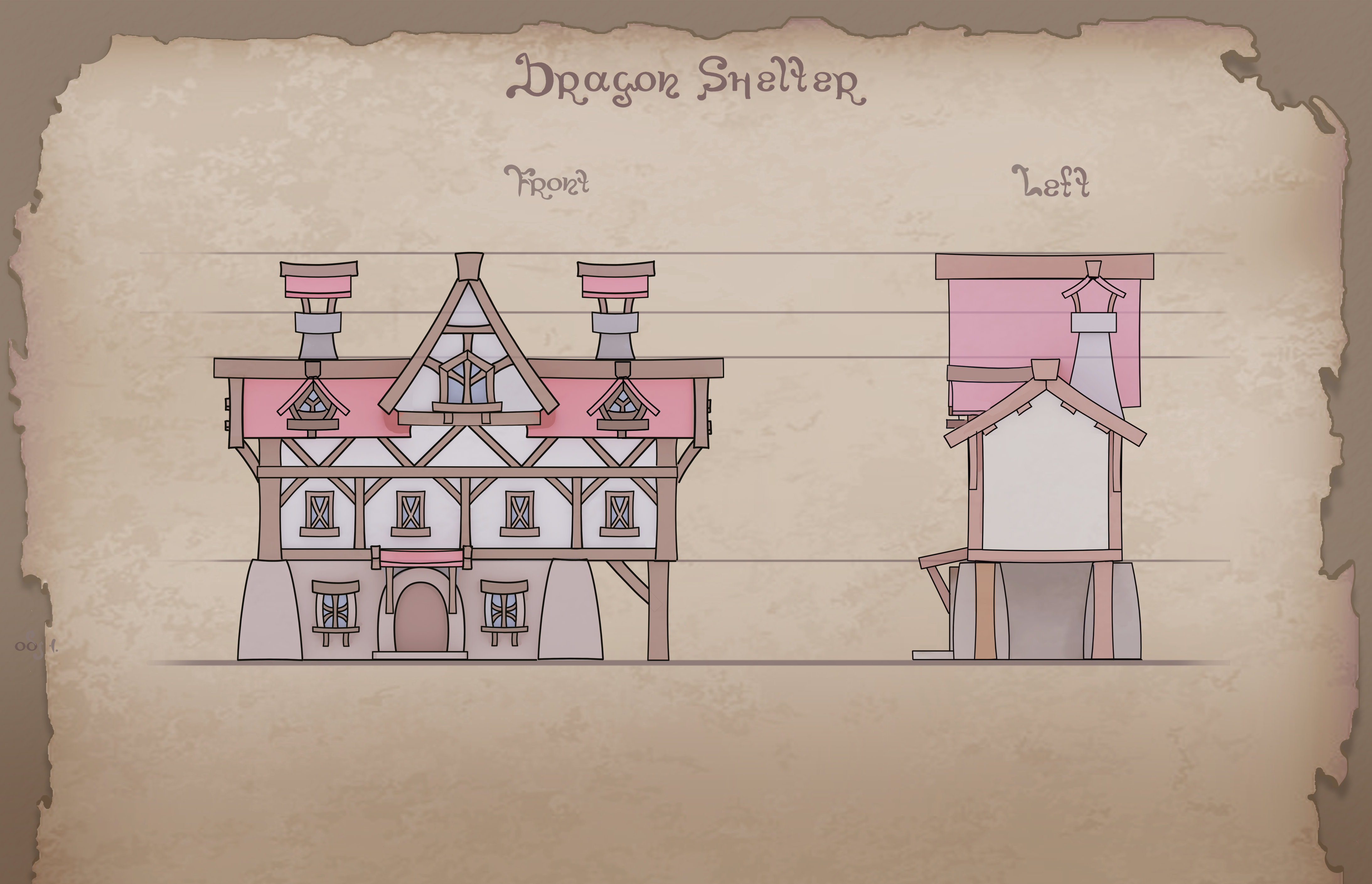
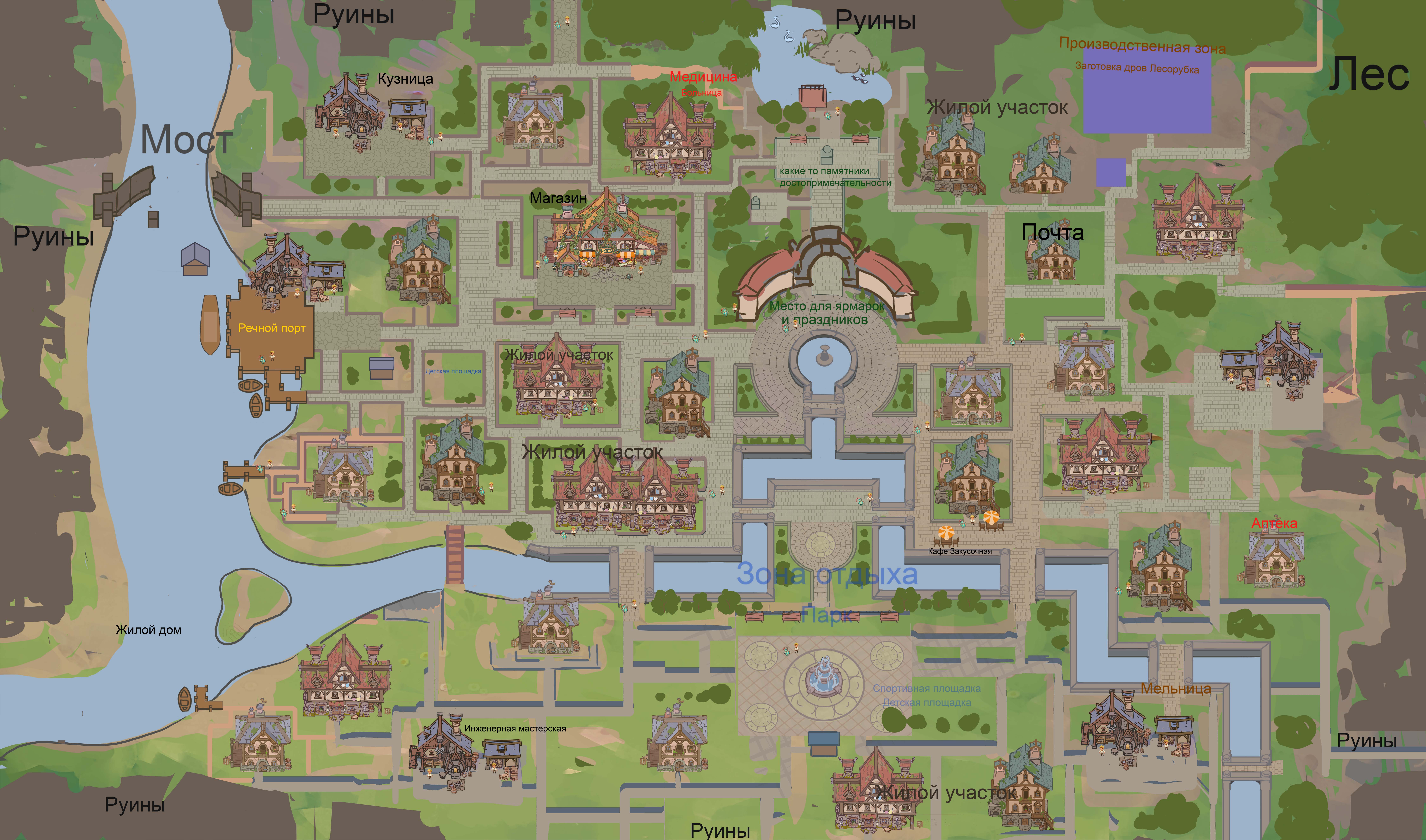
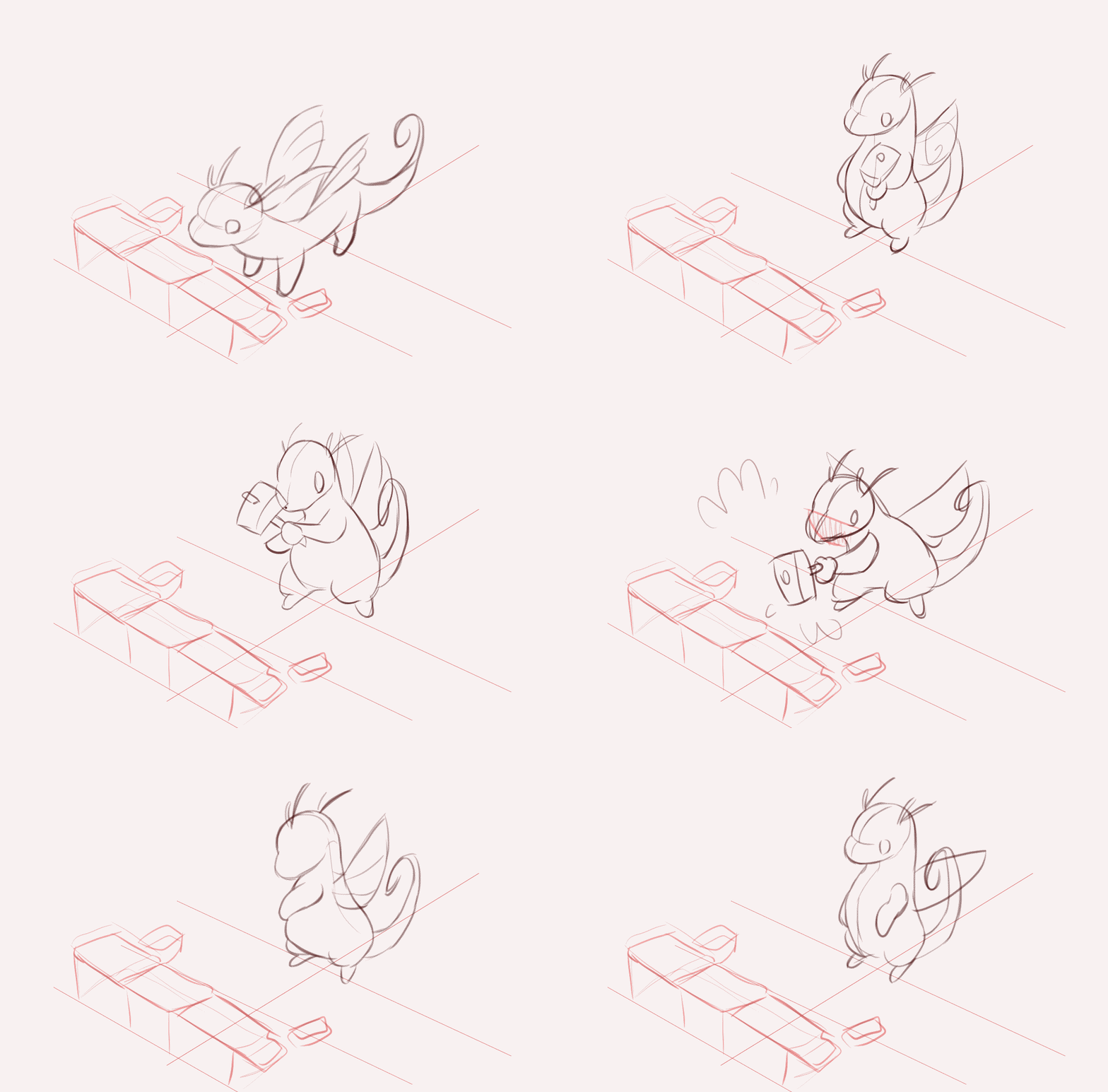
We laid down an isometric grid and rebuilt the location on it: the cottage, the windmill, garden plots and fences, stone paths cutting across the grass, laundry strung up in the yard. Then we took our favorite dragon concepts and re-posed them onto the same grid, redrawing each from a quick sketch to clean lineart to color so we could judge how they'd actually sit in the world — their scale next to a house, how they'd cast against the ground, whether two of them read clearly side by side.
The color and mood came together alongside the geometry. We leaned into warm, sunlit greens and soft skies — a friendly, storybook farmstead rather than a dark fantasy lair. By the end of this stretch we weren't just drawing pictures anymore; we had a consistent angle, a palette, and a small cast of dragons that all belonged to the same world.
Sketches & process

What we built
- Painted the first Dragon Shelter key-art poster — a rider and galloping dragon racing past a windmill farmstead
- Explored compositions in greyscale value thumbnails, then took the chosen layout through line-art to full color
- Filled concept sheets with dozens of dragon designs and narrowed them to a few with strong, distinct silhouettes — a water dragon, a stocky 'calf' dragon, and a small round dragonling
- Locked the isometric camera as the game's signature look
- Rebuilt the farm location on an isometric grid: cottage, windmill, garden plots, fences and paths
- Re-posed the chosen dragons into isometric and tested their scale and composition inside the scene
- Settled the world's palette and mood — warm sunlit greens and soft skies, a cozy storybook farmstead