The Spirit Tower at the center
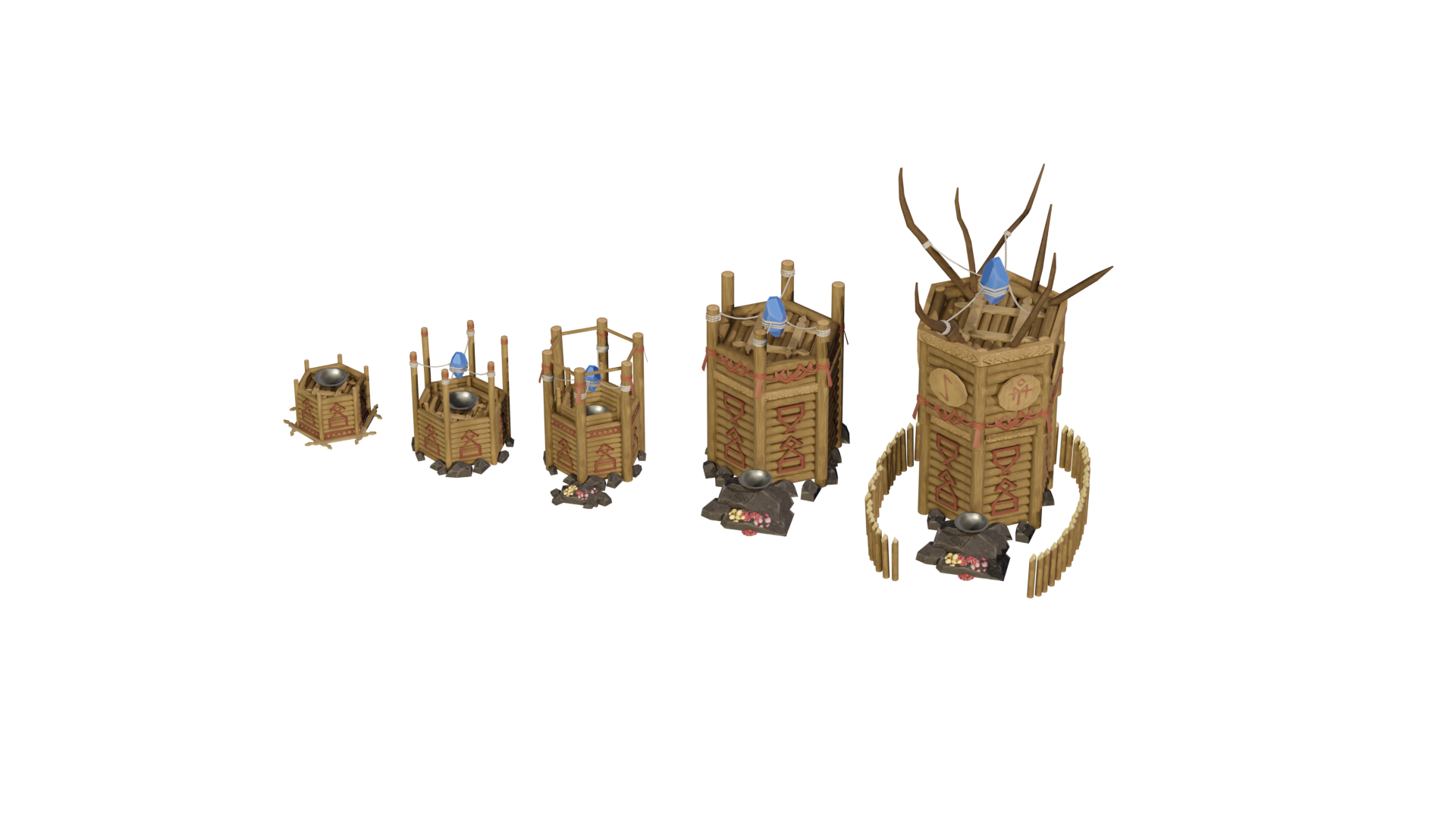
From early on, the Spirit Tower was the building we kept coming back to. It is one of the most important structures in the settlement, so we wanted both the tower and its upgrade tiers to be genuinely good to look at. In the spring we sat down in the art department, gathered references, and reworked it from scratch: first a fresh 2D concept of the tower and its grades, approved internally, then a full 3D model built from that concept and polished against feedback. By early June the model and its revisions were done and handed off for emission setup and integration into the game. The first combat spells for the Spirit Tower had already gone into an earlier build, so the redesign gave a stronger shape to a building the player leans on through the night.
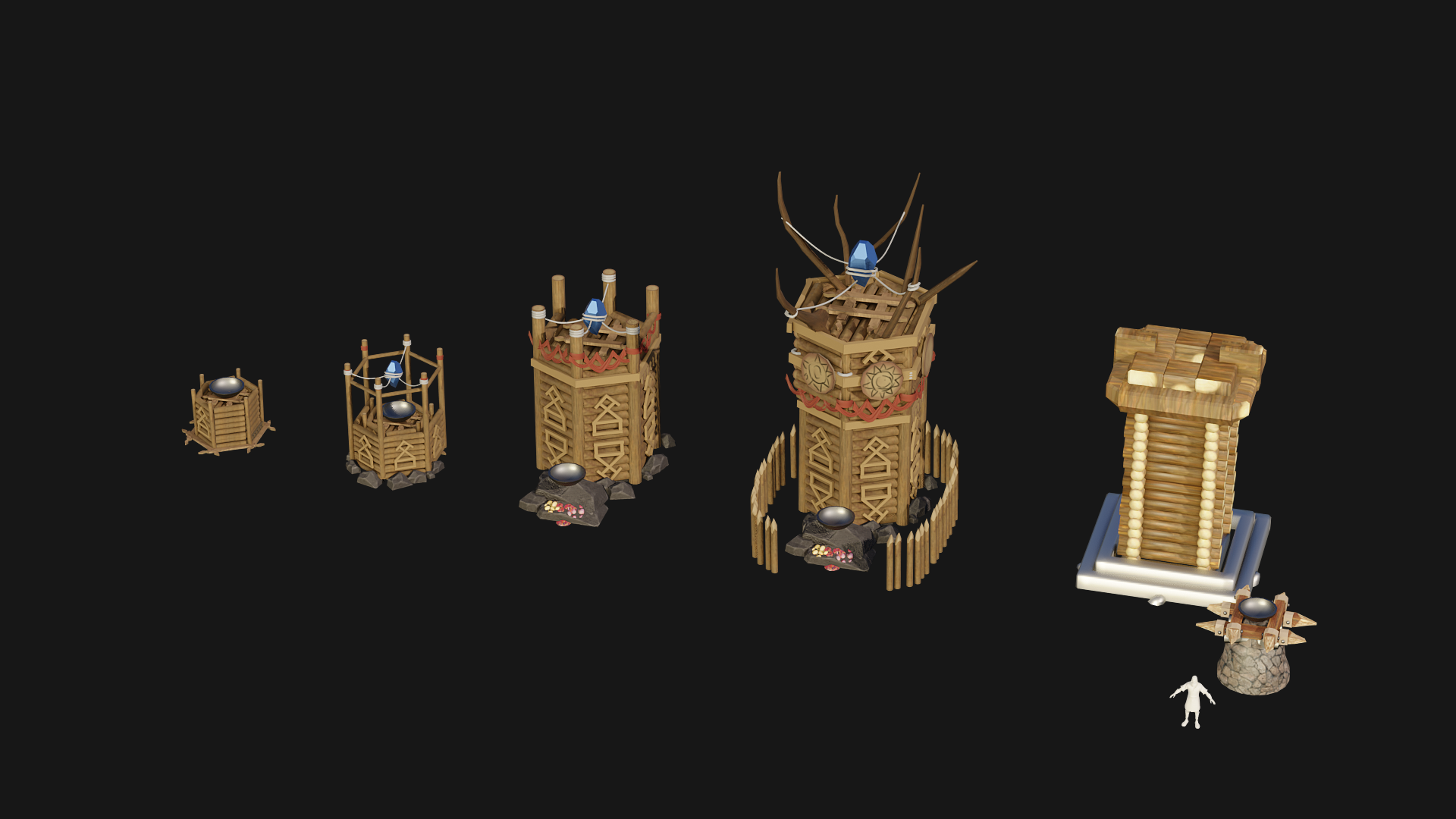
The Spirit Tower is one of the key buildings in the game — we wanted the tower and every one of its grades to be worth looking at.
Farms, fields, and the things you gather
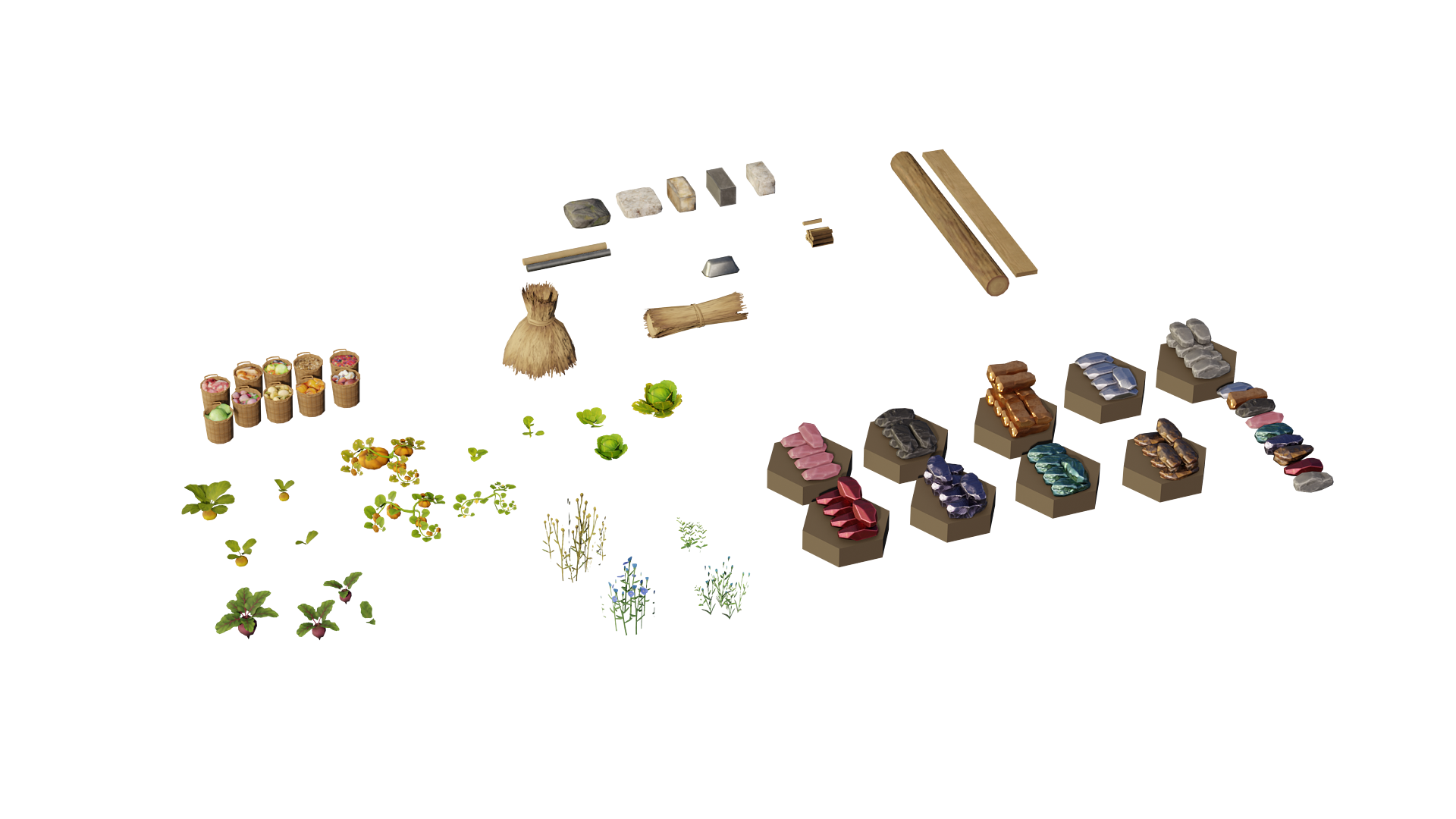
A lot of 2023 went into making the village feel like a living economy rather than a checklist. We reworked the farm so the farm building and the fields actually connect: different crops appear in the world, their seeds can be found out on the biome, collected, and then grown on your fields. The development side finished its part of that loop and we passed it to testing. Alongside it we did a broad pass on the small resource and vegetation objects — baskets of harvest, bundles of straw, logs, planks, stone and ore deposits, garden plants — remodeling and optimizing the missing pieces so everything sat under one unified art look. We also touched the buildings around the village: grades and construction for the scientist's building, a 2D concept for the barracks, and a general audit and cleanup of the GUI and HUD.
Biomes, threats, and steady builds
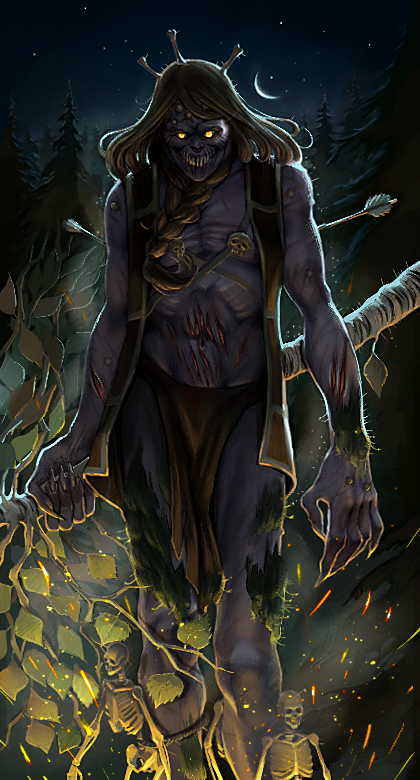
The world grew biome by biome. We tuned existing locations — Pinewood, Swamp, Dead Forest, Greenwood, Skyland, including fog-of-war work — and prototyped a new "Mountain Valley" biome to add varied terrain between Swamp and Pinewood and give the map more replayability. By early June the prototype was integrated and being tested in-game via cheats. The night side of the loop took shape too: an audit of the creatures' models to decide what to optimize first, and folklore illustrations like the Leshy and the Miller. Underneath all of it was a steady rhythm — builds landing in Steam and Git through the year (versions like 0.28.07 in January and 0.33.03 by June), a dedicated branch for external testing, and outside playtest feedback we folded back into fixing the things that annoyed players.
What we built
- Spirit Tower redesigned: a new 2D concept of the tower and its upgrade grades, then a polished 3D model built and prepped for integration; its first combat spells had already shipped in an earlier build
- Farm reworked to connect the farm building with fields — crops whose seeds are found on the biome, collected, and grown on your own fields
- Small resource and vegetation objects (harvest, straw, logs, stone, ore deposits, plants) remodeled and optimized under one unified art look
- New "Mountain Valley" biome prototyped, integrated, and tested in-game to vary terrain between Swamp and Pinewood; existing biomes (Pinewood, Swamp, Dead Forest, Greenwood, Skyland) tuned, including fog of war
- HUD and resource work: clearer building construction indication, an ALT view of a building's repair needs, and flexible resource-icon display to reduce on-screen clutter
- Regular playable builds to Steam/Git with a dedicated external-testing branch and outside playtest feedback driving fixes